
BUY MY BOOKS | HOME | FICTION | ESSAYS | ON-LINE DIARY | MARGINALIA | GALLERY | INTERACTIVE FEATURES | FAQ | SEARCH ENGINE | LINKS | CONTACT


the official website for the writings of
ralph robert moore
www.ralphrobertmoore.com
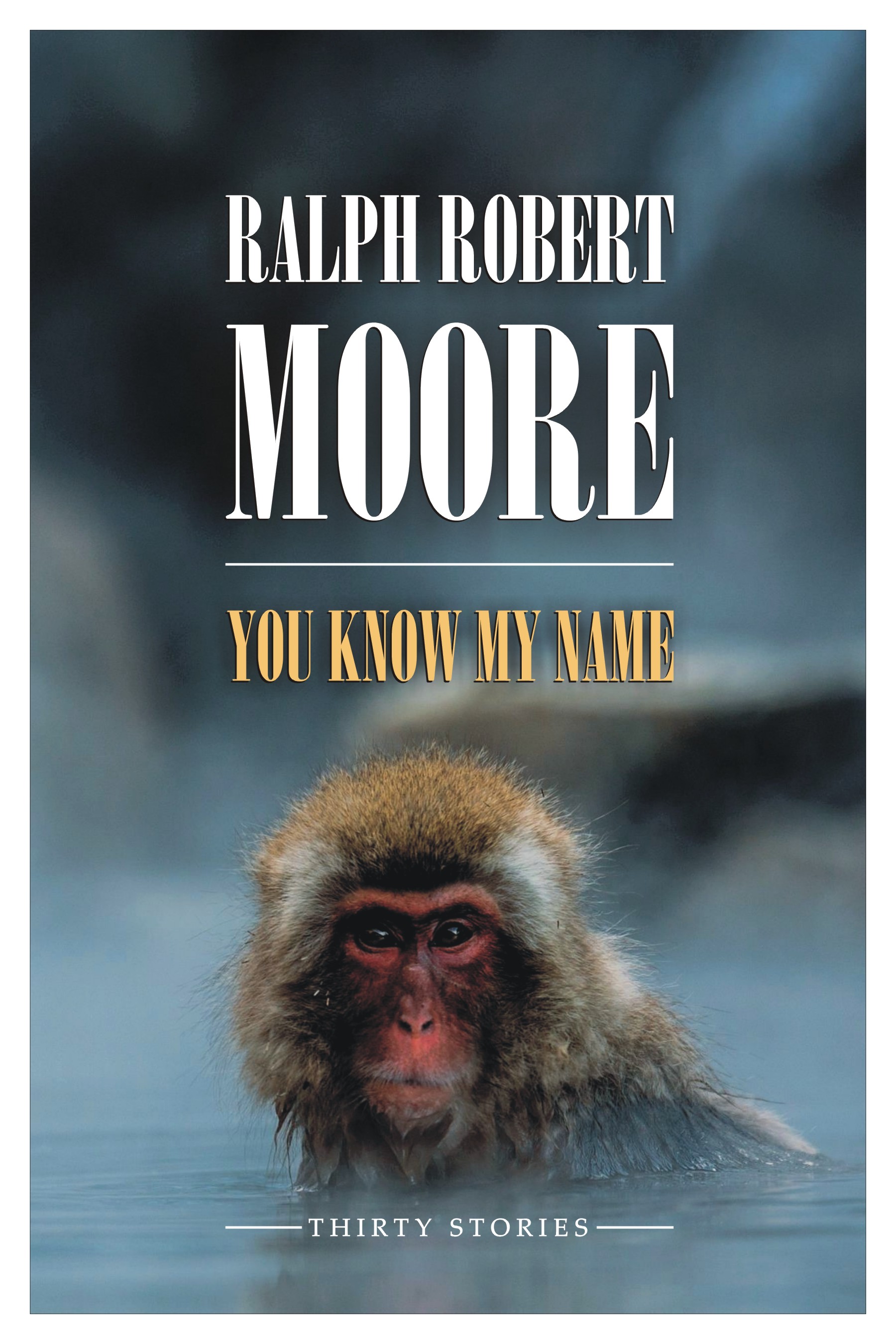
You Know My Name contains 30 short stories and novelettes. 600 pages. 160,000 words.
Here's a quick glimpse at the 30 stories and novelettes in this latest collection:
When you're trapped by a blizzard in a deserted fort in the far north, what happens next when bugs with large eyes start climbing up the walls, and across the ceiling? If a young woman tells you she's a witch, should you really let her go inside your backyard chicken coop? What is digging tunnels under your grass, all of them headed towards your house? If a pack of dogs each have six legs, should you be concerned when they start following you? If after falling into the ocean out in the middle of nowhere you're rescued by a ship captained by a man who constantly wears a hood over his head, should you be worried?
Your wife invites a co-worker she may be cheating on you with over for Thanksgiving, and each slice you cut into the turkey breast reveals more and more small bones within the white meat. The woman you met at a bar can only flirt with you by passing you notes, because her tongue has been cut out. A distinguished plastic surgeon has had so many facelifts on his own face his face starts to slide on the underlying bones. The men's room you step into has no toilets, just wide pipes with open tops sticking up in the air. The monkey you and your wife coax down from your roof really likes chocolate ice cream.
Why don't more people take out life insurance policies on high school children, since so many of them are likely to die fairly soon from car crashes or suicide? Is it difficult living with a woman who doesn't have a head? Why is the window-washer outside your office window exposing his genitals to you? What lives in the crevices formed by earthquakes? Can you be friends with a neighbor who's had his human teeth replaced with canine teeth?
You're having breakfast at the local diner when everyone in town starts lifting up into the sky. You and your family are stuck in traffic in Las Vegas when a man on the sidewalk starts taunting you. Your only chance to stop being homeless is to agree to be dropped by helicopter in the middle of a large field, and use the sponsor's lawnmower to mow a path to the sidewalk within so many minutes. You're studying to get your real estate license, but the red-haired boy in your backyard keeps trying to lure your challenged son outside. You're confident you can settle a dispute between your boyfriend, a respected chef, and a children's birthday party clown.
What do you do when your new job, out in the middle of nowhere, taking groups on tour, is interrupted by a lion? If the ground starts falling away from you and your girlfriend and her little sister, the dead down in the bottom of the ever-expanding trench following you, what's the best strategy? When your rowboat is attacked by fish, is the best decision to swim to the shore? What are the consequences when a wide sheet of glass starts sailing in the air down a busy city street? When a cat's head appears in your backyard, is it wise to follow its suggestions?
You want to stop all these endless relocations, but if you do, you know what will be waiting for you when you walk through the glass door with your bag of burgers and fries out into the McDonald's parking lot. Your life is such a mess you don't even notice the people hiding behind furniture in your home. The only way to not again spend time in jail is agreeing to be locked in a cage in an abandoned zoo. You made one assumption and it was wrong, then another assumption and that was also wrong, and now, naked, you're being chased by a chainsaw. Sometimes, a person just drowns-or doesn't.
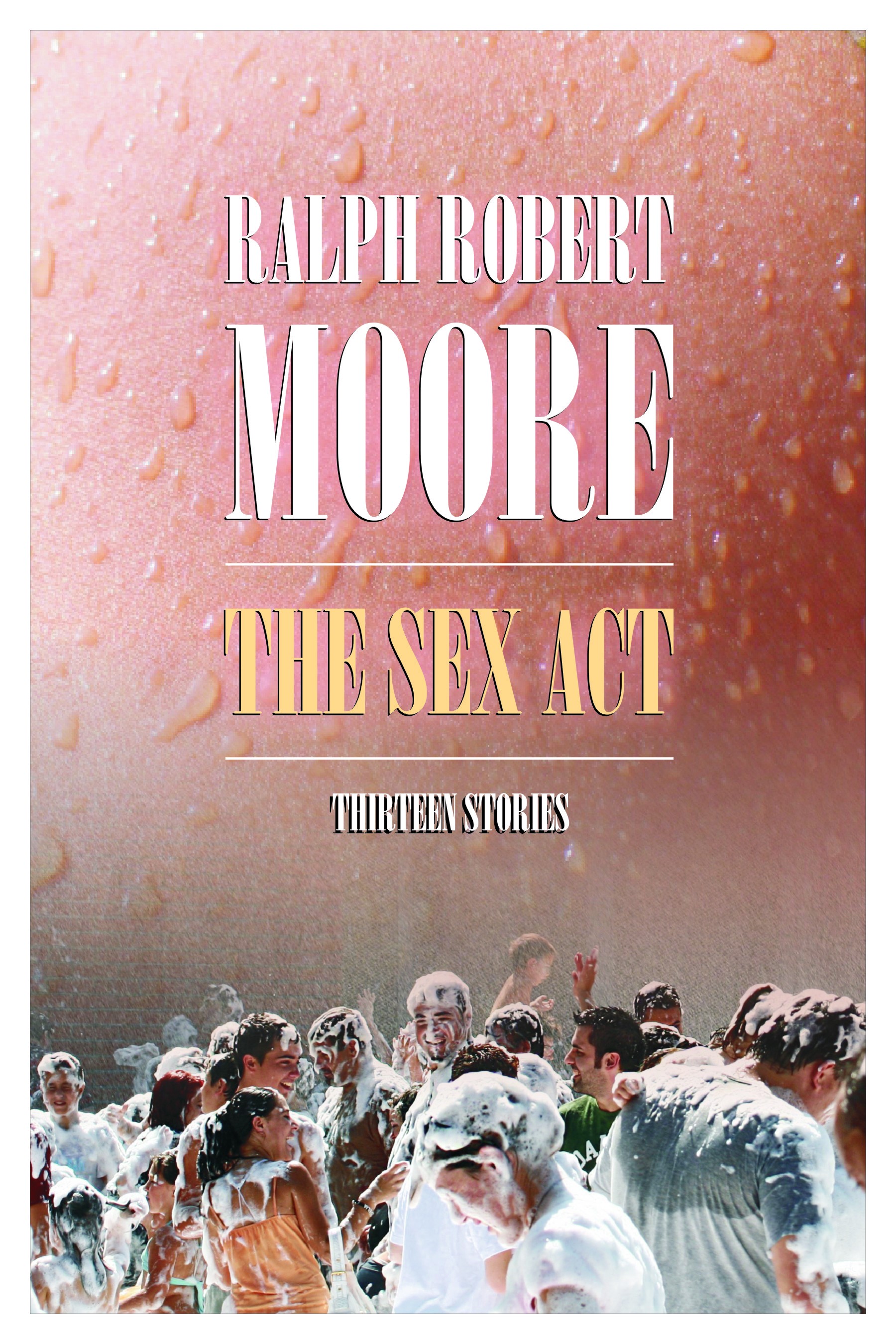
My newest collection, The Sex Act, has now been published in both trade paperback and Kindle editions.
The cover design is by the wonderfully talented Horia Nicola Ursu, using a foreground image created by Venturaartist. This is Horia's fourth cover he's designed for me. I highly recommend him. I raise my glass to you, Horia.
'The Sex Act' is a collection of thirteen stories and novelettes that all revolve around sexual obsession, from early youth to old age. They're funny, sad, surprising, unsettling, and occasionally offensive.
Just like sex is.
Here's the line-up:
When You Surfaced
The First Shorts of Spring
Truth Be Told
The Middle Leg
Sex on Sheets
Rattlesnake in a White Envelope
Freedom From Want
My Doll Likes to Eat
Beaten Up by Girls
The Wet Months
The Rape
Daddy's Glad Hands
The Final Fuck
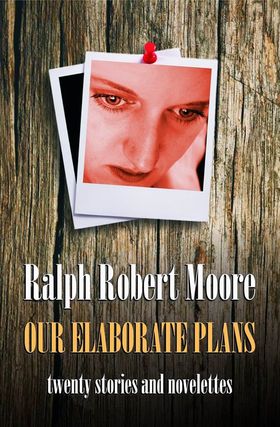
I'm really, really pleased to announce that my latest collection, Our Elaborate Plans, is now published and ready for purchase, in Kindle and trade paperback editions.
This is my tenth book, and my largest collection to date. Twenty stories and novelettes. 550 pages. 160,000 words. It's a mix of horror/weird/slipstream stories.
A boy who likes digging holes, has a little sister who adores him, and a mother who is dying.
Someone who while urinating feels a lump on one of his testicles.
A magician and his monkey assistant, who absolutely adores him, and a top hat that allows him to pull out all sorts of unexpected objects.
A man who comes back after peeing in the middle of the night to his bedroom and finds a strange woman in bed where his wife had been.
An old man journeys to an abandoned factory in upstate Michigan to an unusual safari where the wildlife driven past isn't animals, but ghosts.
A young boy who has to go in for some medical tests, and a neurotic woman who 'meets' him years later.
What happens when a wife realizes her older husband is showing signs of dementia?
How do you cope when a noise from the sky keeps getting louder and louder, causing more and more people to lose their sense of hearing?
What are you willing to do to appear in a porno as a way to escape working as a short-order cook for a racist employer?
What happens when you rehearse lines in an abandoned model home for an upcoming part and a stranger shows up?
How do you cope when the ghost of your dead dog keeps nipping at you?
Is it really safe to visit with the father of a girl you just met in his workplace far under the Hudson River?
A man who starts following a woman who likes to insert herself into wedding photographs at the local park.
Someone who has to deal with little men running like cockroaches across his ceiling.
An old man who's woken at night by naked men barking behind his backyard's fences, pretending they're dogs.
A man in a wheelchair who wants to bring his lover, seated in a chair in his motel room with a blanket over his body, back to life.
Is it really a good idea for two boys who watch a TV show that gradually gives directions on how to reach a secret house hidden in the woods to seek out that house?
Have you really considered all the precautions you need to take when a freak snowstorm blows through Texas?
What could possibly go wrong when you take your kids and your second wife on a vacation in the islands?
When you see something pass by outside the front glass of an ice cream shop, why do you go to the restaurant's restroom, lock yourself inside a stall, get down on your knees, and start slapping your forehead down on the porcelain edge of the toilet?
About Ralph Robert Moore
Ralph Robert Moore, nominated twice for Best Story of the Year by the British Fantasy Society (2013 and 2016), has been published in America, Canada, England, Ireland, France, India and Australia in a wide variety of genre and literary magazines and anthologies, including Black Static, Cemetery Dance, Shadows & Tall Trees, Nightscript, Midnight Street, Chizine, and Sein und Werden.
His books include the novels Father Figure, As Dead As Me, Ghosters and The Angry Red Planet; and the short story collections Remove the Eyes, I Smell Blood, You Can Never Spit It All Out, Behind You, and Breathing Through My Nose.
"Moore's work is consistently fascinating, original and devastating. His characters speak to you from whatever hell they inhabit, with clear, unambiguous voices."-Trevor Denyer
"[Moore's] work is not quite like that of anybody else. He is a true original."-Peter Tennant
"Moore's work is always heartfelt, deep and superbly executed…a writer everybody with an interest in dark fiction should be reading."-Grim Reader Reviews
"Disturbing. Nightmarish. Terrifying. And above all, original...reinforces his reputation, amongst those in the know, that here we have a genre-storytelling giant in our midst."-AJ Kirby
"Moore's writing is consistently powerful, his descriptions (even of the smallest minutia) terrifically rendered. He is not afraid to tap into his darkest imaginings and to go places most writers might very well shy away from. Indeed, he is one of the most singularly powerful authors I've encountered in a long, long while."-C.M. Muller
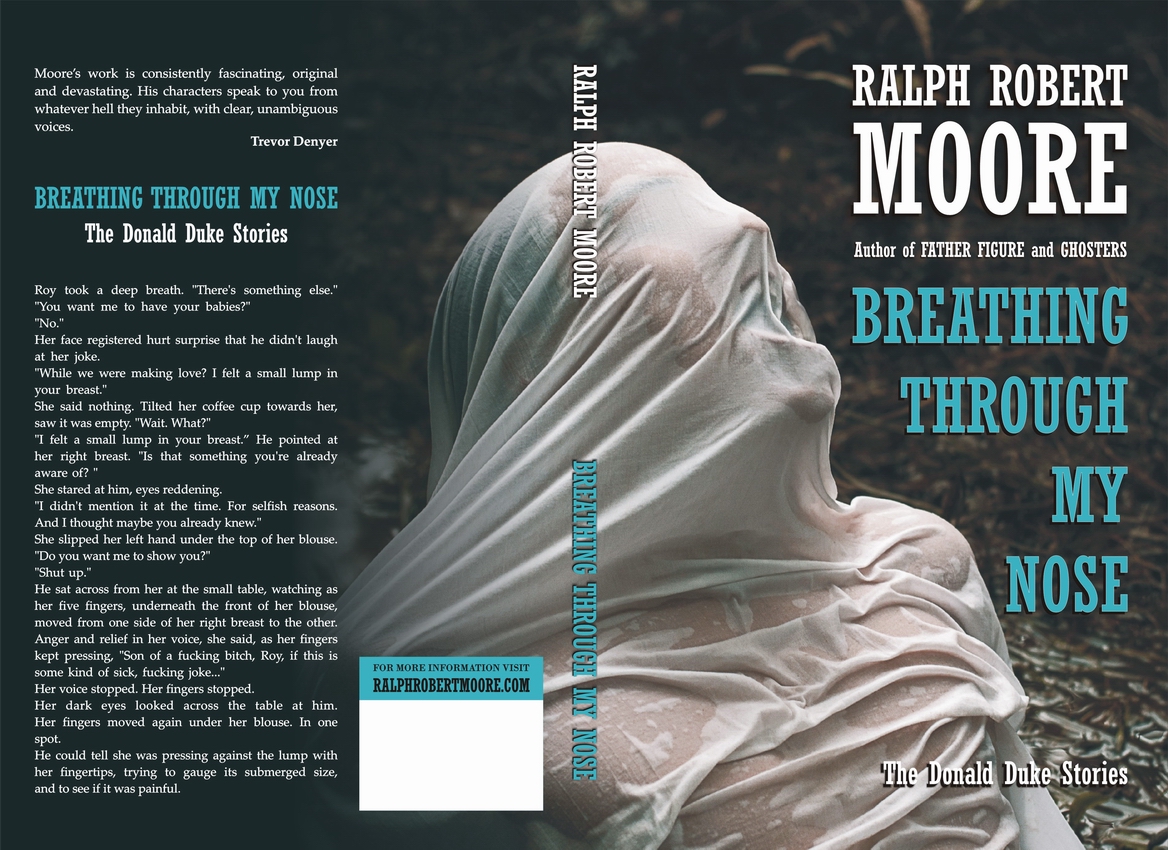
Breathing Through My Nose documents eight cases in which Donald Duke entered someone's life.
"RRM always makes you think. No political correctness here." - Des Lewis, Gestalt Real-Time Reviews
Roy took a deep breath. "There's something else."
"You want me to have your babies?"
"No."
Her face registered hurt surprise that he didn't laugh at her joke.
"While we were making love? I felt a small lump in your breast."
She said nothing. Tilted her coffee cup towards her, saw it was empty. "Wait. What?"
"I felt a small lump in your breast." He pointed at her right breast. "Is that something you're already aware of?"
She stared at him, eyes reddening.
"I didn't mention it at the time. For selfish reasons. And I thought maybe you already knew."
She slipped her left hand under the top of her blouse.
"Do you want me to show you-"
"Shut up."
He sat across from her at the small table, watching as her five fingers, underneath the front of her blouse, moved from one side of her right breast to the other.
Anger and relief in her voice, she said, as her fingers kept pressing, "Son of a fucking bitch, Roy, if this is some kind of sick, fucking joke-"
Her voice stopped. Her fingers stopped.
Her dark eyes looked across the table at him.
Fingers moving again under her blouse. In one spot.
He could tell she was pressing against the lump with her fingertips, trying to gauge its submerged size, and to see if it was painful.
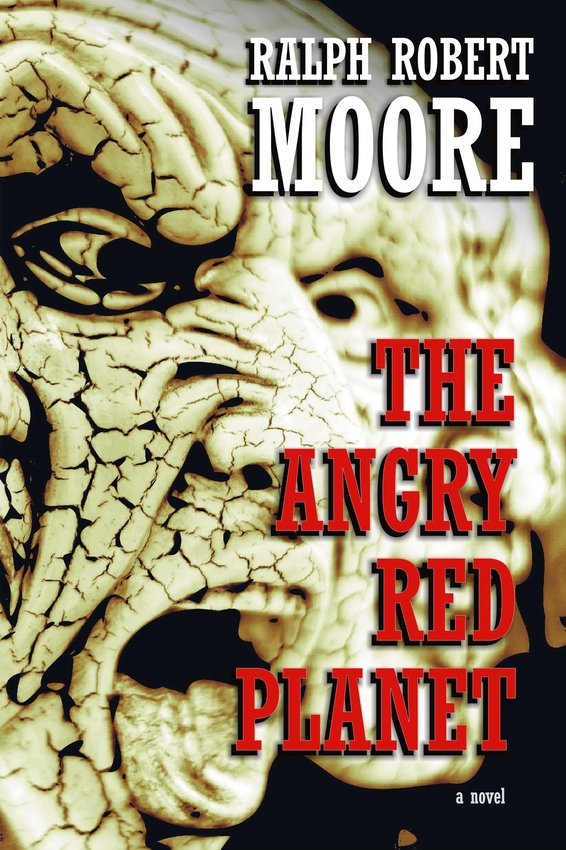
"We used to finish each other's sandwiches."
Harry and Edna are a middle-aged married couple who probably did love each other when they were young and just starting out, but now maybe don't any longer? Or possibly still do, in some ways? It's so hard to tell sometimes, with people who have shared their lives for so many years.
Harry, a big, angry, disappointed man with a sarcastic sense of humor, flips houses for a living in the greater Dallas area, buying run-down homes, supervising his crew as they go in and renovate the properties, reviving them so they're once again a thing of beauty.
Edna, his wife, has become increasingly promiscuous, and has had to undergo more and more invasive surgeries to try to eliminate an infection that has taken hold in her body.
The Angry Red Planet is a sad, funny, scary exploration of the changing relationship between a man and a woman, and the daily social irritations that slowly grind them down, like they grind all of us down.
About Ralph Robert Moore
Ralph Robert Moore, nominated twice for Best Story of the Year by the British Fantasy Society (2013 and 2016), has been published in America, Canada, England, Ireland, France, India and Australia in a wide variety of genre and literary magazines and anthologies, including Black Static, Shadows & Tall Trees, Nightscript, Midnight Street, Chizine, and Sein und Werden.
His books include the novels Father Figure, As Dead As Me, and Ghosters; and the short story collections Remove the Eyes, I Smell Blood, You Can Never Spit It All Out, and Behind You.
"Moore's work is consistently fascinating, original and devastating. His characters speak to you from whatever hell they inhabit, with clear, unambiguous voices."-Trevor Denyer
"[Moore's] work is not quite like that of anybody else. He is a true original."-Peter Tennant
"Moore's work is always heartfelt, deep and superbly executed…a writer everybody with an interest in dark fiction should be reading."-Grim Reader Reviews
"Disturbing. Nightmarish. Terrifying. And above all, original...reinforces his reputation, amongst those in the know, that here we have a genre-storytelling giant in our midst."-AJ Kirby
"Moore's writing is consistently powerful, his descriptions (even of the smallest minutia) terrifically rendered. He is not afraid to tap into his darkest imaginings and to go places most writers might very well shy away from. Indeed, he is one of the most singularly powerful authors I've encountered in a long, long while."-C.M. Muller
Behind You is my latest collection. 18 stories and novelettes. 400 pages, 110,000 words.
Includes "Our Island", nominated in 2013 for Best Story of the Year by the British Fantasy Society.
What crawls after midnight on elbows and knees into hospital emergency rooms?
Who hides in the woods waiting for hikers who get lost?
How could a 90-year old woman get pregnant?
Is a bird really a bird if it has no feathers or wings or head?
Is there a ghost in your best friend's attic?
Do dolls get cancer?
Can sharks attack someone on a cobblestone street?
Is it wise to have an affair with your dental hygienist?
What should you do when you suddenly discover you are male, and have a penis?
How do priests protect Latino boys from a young girl who likes to put her pet tarantula inside her mouth?
Why are you so drawn to a red-haired computer nerd who is indifferent to your beauty?
How does a middle-aged couple appearing together in Italo-Spanish-German low budget horror films maintain their relationship when the wife is now being cast in movies as a witch, while the husband still has sex scenes with actresses half his age?
When your toilet tells you that you need to get a screening colonoscopy, can your toilet be trusted, especially when your life is being filmed every day by a reality TV crew?
How dangerous, and in other situations quite useful, are bananas?
How many versions of you and the love of your life exist?
Is the world just one island, and endless ocean?
What are you hiding, where are you hiding it, and are you willing to submit to a rectal exam?
Amazon Trade Paperback/Kindle US
Amazon Trade Paperback/Kindle UK
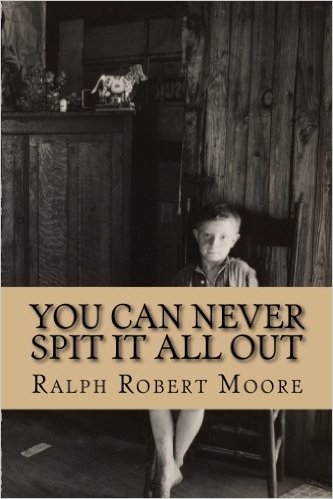
10 horror novelettes by Ralph Robert Moore. 400 pages. 120,000 words.
Includes "Dirt Land", nominated in 2016 for Best Story of the Year by the British Fantasy Society.
Children born with four feet. A man physically attached to three other men. A pushy waitress. A woman who dresses up as Santa Claus on Halloween. An off-campus NYC apartment overrun with tiny, crawling faces. A tomato with spikes sticking out of its red skin. A third rate stand-up comic who insists he isn't gay. A lonely woman who constructs a tabletop village of miniature buildings wherever she moves. A widow who's visited by God in a dream, singing instructions to her about the structure He wants her to build. A psychiatry student who has to convince a handcuffed serial rapist to sit on a toilet seat to reconnect with his childhood.
Featuring 3 novelettes from Black Static, "Dirt Land", "Kebab Bob" and "Drown Town"; 3 novelettes from Midnight Street, "They Hide in Tomatoes", "Nobody I Knew", and "Suddenly the Sun Appeared"; 1 novelette from Hellfire Crossroads, "She Has Maids", and 3 novelettes never before published, "During the Time I Was Out", "Imperfect Boy", and "Boyfriend".
"Up on the mountain, not everything that gets born is human. Or at least, human enough. That's just the way it is. Some of them are kept, if they look close enough, but a lot are taken down to the river before they get big, and drowned. Shaken out of a blanket. If you go downstream, you'll find all kinds of dead babies bumping against the gray river rocks. Stiff limbs, open mouths. Getting picked at by fish. Of course, up on the mountain, the people who live there catch that fish, like they catch all fish. Fry it. Eat it. That may be part of the problem."
--Opening paragraph of "Dirt Land"
Amazon Trade Paperback US
Kindle Edition US
Amazon Trade Paperback UK
Kindle Edition UK
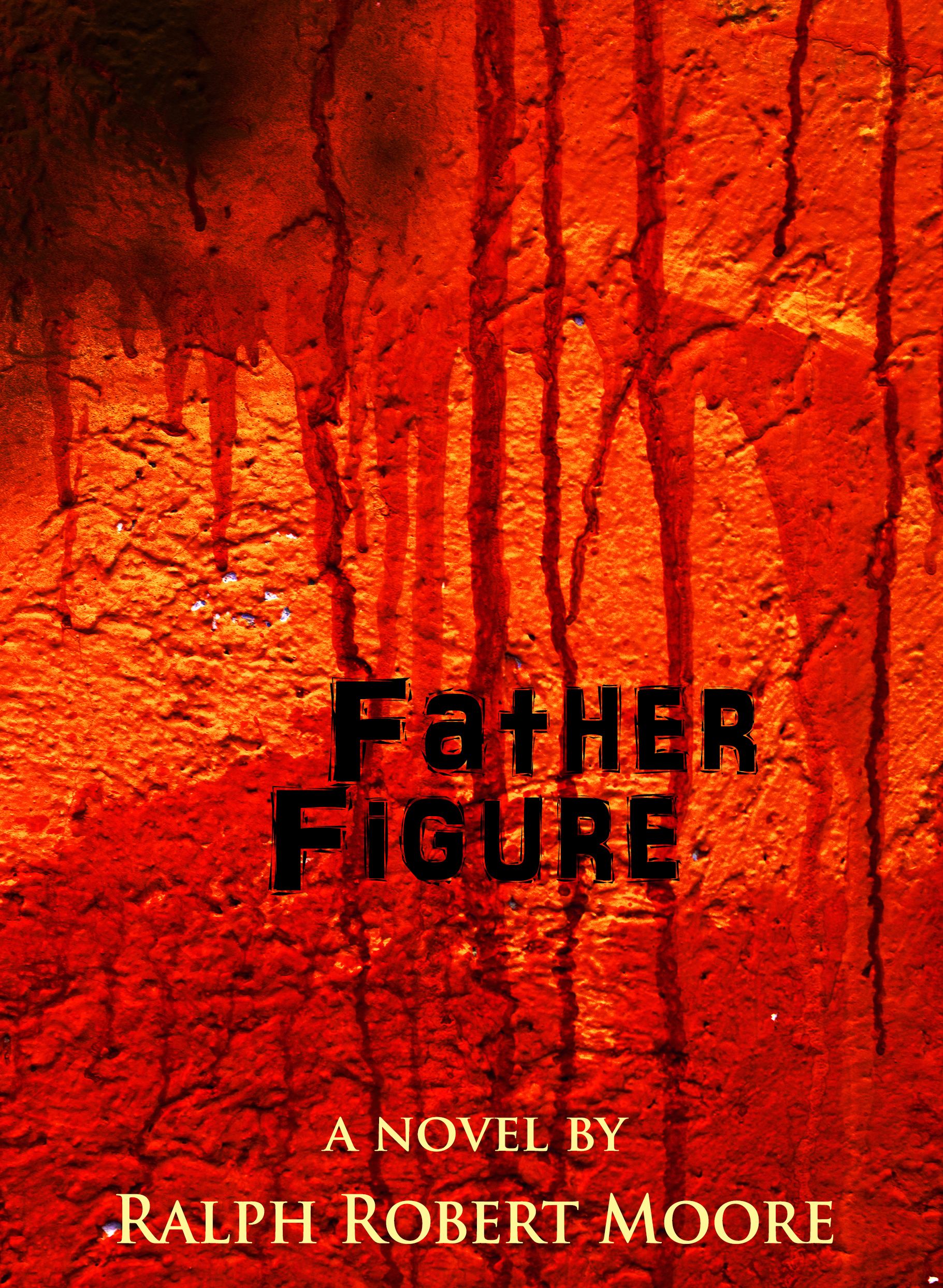
The full text of Father Figure is now available in new trade paperback and Kindle editions, with a 2015 Author's Preface, and an appendix which includes 6,000 words in deleted scenes.
Father Figure is also available at all other Amazon sites worldwide, and additional online venues. 175,000 words, plus 6,000 words of deleted scenes.
South of Anchorage, accessible only from a mud-rutted road off Seward Highway, lies the town of Lodgepole. After midnight, among the blueberry bushes of White Birch Park, a man climbs on top of a woman and begins making love to her. As her orgasm rises he puts his hands around her throat, shutting off her air. She struggles, not to stop him, but to stop herself from trying instinctively to pull his hands off her throat. As the top joints of his thumb meet at the front of her throat she comes, her cry of orgasm ricocheting around inside her forever.
Daryl Putnam, handsome, bookish, wakes up from a nightmare and decides to do something he hasn't done in years. Take a walk outside at night. Down in the park, at the lime green shores of Little Muncho Lake, he comes across the body of the strangled woman.
The next morning, at the coffee shop of the hospital where he works, Daryl meets Sally, a pretty, dark-haired girl. He's intelligent, she's outgoing. What they have in common is both are living lonely lives. Until today.
Also in the hospital coffee shop, shaking half a can of black pepper onto his tomato soup, is Sam Rudolph, a fiftyish man with eyes like an angry dog's, who has spent over twenty years quietly manipulating events in Daryl and Sally's lives to have this seemingly chance encounter among the three of them occur.
And who is actually a lot older than fifty.
"It is easy to see why Father Figure has become an underground classic over the years. It is a dark, extremely disturbing but completely gripping suspense thriller with a strongly erotic subtext...Moore is an extremely talented writer with a gift for pushing the reader's emotional buttons...certainly liable to become a cult classic, and deservedly so."
From an editorial review
"Immensely readable and informed by a lucid intelligence, Father Figure belongs up there with the likes of Delany's The Mad Man, Bataille's Story of the Eye, Sade's oeuvre, The Story of O, and other works of transgressive literature that challenge our assumptions as what is normal and what goes beyond the pale."
Peter Tennant, Black Static magazine
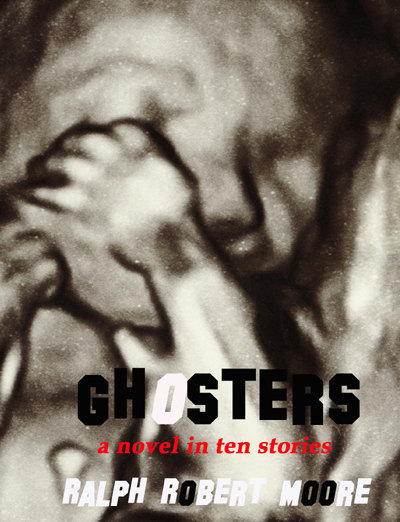
When someone you love dies, are they gone forever?
Meet the Ghosters, and the desperate people who hire them.
In our modern world, only Ghosters know what comes after death. What stays behind. And what dwells between.
Ghosters are a small, loosely-connected group of individuals who travel the highways of America curing people of their hauntings. For as much money as they can negotiate from each client. They are legitimate. But they are not nice.
If you're here, it's probably night. You can see a window from where you sit, and the window is dark. Who really knows what's outside?
I write. If you read, we've just made a connection.
SENTENCE is the forest you fall asleep into.
I created SENTENCE back in 1998 as a way of letting readers know a little bit more about me. Here you'll find about a dozen of my stories, the complete text of my novel Father Figure, essays of mine, videos I've made, photographs I've shot, 20 years of my on-line diary entries, some of my favorite recipes, and much, much more. I don't fear plagiarism. Ideas can be stolen-- a simile, a description, a plot, a joke-- but that will happen regardless of the medium in which your luggage is left alone on the airport floor. The truth is, fear of plagiarism is fear of readership. To be plagiarized is never fatal. What is more important is to be read. Because if it's in a box, and no one but you knows about the storms raging through the paragraphs, the footsteps plodding soggily down the sentences, water dripping off the rims of words, that's the biggest shame of all. A fizzle. Because the real achievement of writing is not the writing. The real achievement of writing is someone else reading the writing.
SENTENCE started as an island. Over the years, its accumulated bulk, added to each month, became a continent.
Art is an invitation to go inside someone else's mind. To see our world as they see it. SENTENCE is my mind.
I've been published in America, Canada, England, Ireland, France, India and Australia in a wide variety of genre and literary magazines and anthologies. I've been nominated twice for Best Story of the Year by the British Fantasy Society, in 2013 and 2016. My fiction has been called "graphically morbid". My writings are not for everyone. Are they for you? Find out.
I'm glad you came. I just lit a cigarette. I just made a drink. I hope you enjoy your exploration.
And to see what I'm up to right now, and what currently interests me, visit my page.
Webmaster Ralph Robert Moore at robmary@swbell.net. Entire contents Copyright © 1997-2023 by Ralph Robert Moore, All Rights Reserved.
Established January 1, 1998.
To buy my books, please go to BUY MY BOOKS
To see where I've been published, please go to BIBLIOGRAPHY
For samples of my writing style, please go to WORDS WALKING NUDE
For a complete chronology of site updates, please see HISTORY
Ralph Robert Moore on Facebook
"All was chaos, that is, earth, air, water, and fire were mixed together; and out of that bulk a mass formed-- just as cheese is made out of milk-- and worms appeared in it, and these were the angels."
-- Domenico Scandella, 1599 (Two years before being burned at the stake).
welcome to me
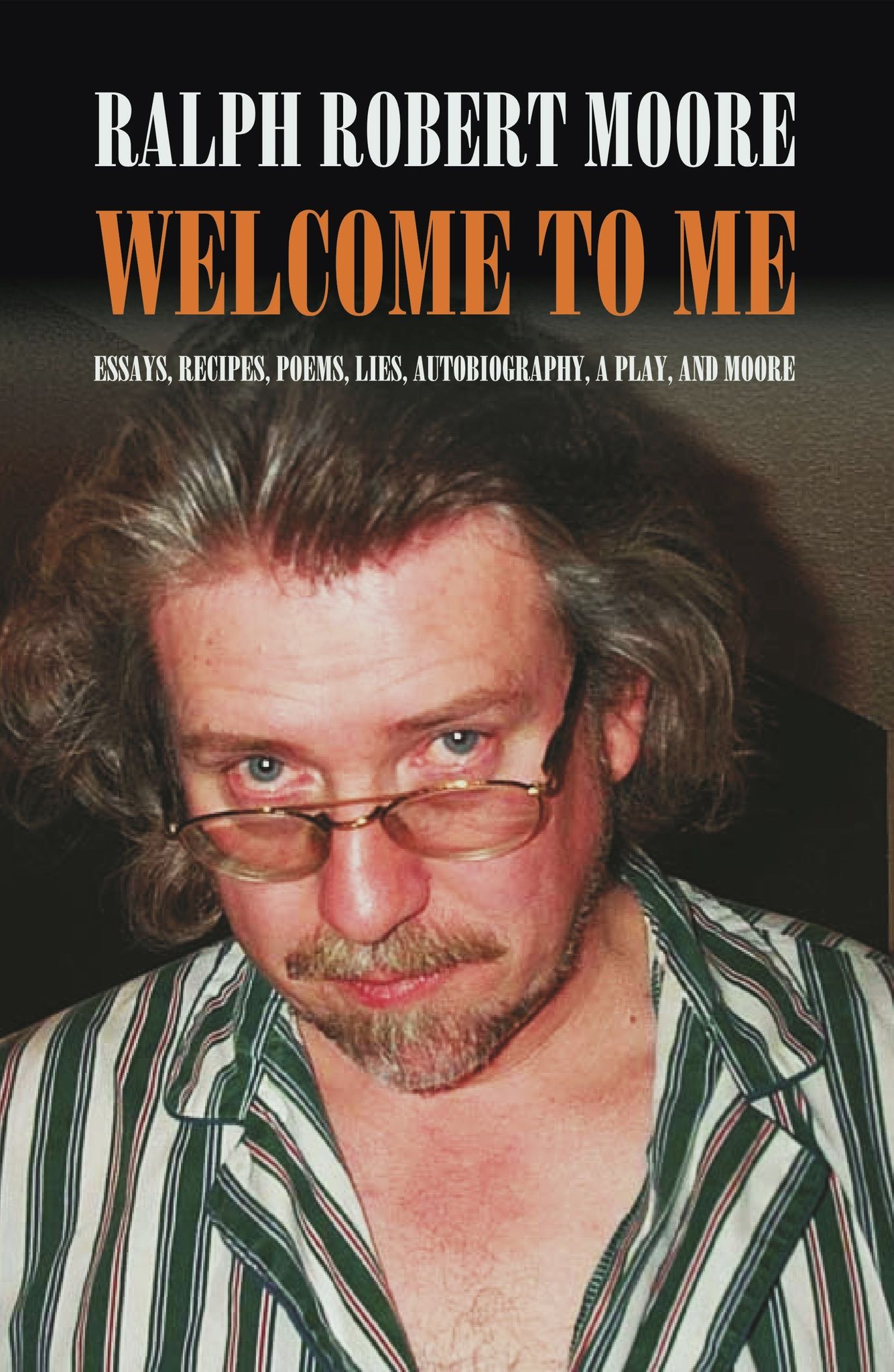
Welcome to Me is my 14th book, and the first book of mine which focuses primarily on my non-fiction.
Included within are:
All of my Into the Woods columns for Black Static, including two that were never published;
All of the essays I've written over the years;
Our World is a Word, a series of articles on how to improve your writing;
Rewrite Bestselling Authors, wherein I rewrite passages from three best-selling authors, Stephen King, Dean Koontz, and Clive Barker;
Friends Before Food, giving detailed recipes for dozens of dishes Mary and I love preparing;
The Crib Years, two lengthy autobiographical pieces on my early childhood;
Facebook Posts, a sampling of posts I've made on Facebook over the years;
Jump Down the Hole, which I created in 2000, featuring fake websites, one in which Antarctica is revealed to be a populous, long-historied nation, and another which features a fake family page for Arnie Maddox;
Duck Eggs, a one-act play;
Tiny Texts, giving 31 examples of a new type of writing I created, in which a story is told in a single paragraph, consisting entirely of run-on sentences.
A selection of my poems over the years;
Examples of my autobiographical on-line diary Lately entries over the years, including when Mary had a stroke, and when I broke my right hip; and
Waiting, the first story I ever wrote for possible publication.
This is without question my biggest book ever. 800 pages. 200,000 words. Front and back cover photographs by Mary; cover design by Horia Nicola Ursu.
I'm really proud of it. This is who I am.
Welcome to me.